On Being Boring

I used to claim I never get bored. It is still mostly true. I am a learning junkie.

Lately, I have hit a plateau where I know exactly how much I don’t know. And I’m okay with that.

Boring has always struck me as a type of laziness. The world is far too vast and interesting and diverse to never have something to explore. For awhile.

I traveled extensively internationally and within North America. Traveling has the advantage that if boredom does hit, you likely have a lot of options to occupy your time. Museums. Art galleries. Sidewalk cafes. Restaurants. People watching.

Lately my learning journey has turned more inward. I feel myself swinging toward slowing down and more deliberate learning. A harvest of sorts.

My interest is spending more time deepening what I already know. As has happened so many times in my life, the exact words came along that capture this feeling.

Poet Wendy Cope pretty much captures how I’m feeling these days. Being boring ain’t so bad.

Being Boring

by Wendy Cope
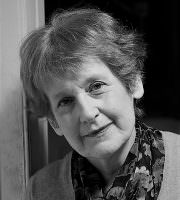
Wendy Cope

‘May you live in interesting times,’ Chinese curse

“If you ask me ‘What’s new?’, I have nothing to say
Except that the garden is growing.
I had a slight cold but it’s better today.
I’m content with the way things are going.
Yes, he is the same as he usually is,
Still eating and sleeping and snoring.
I get on with my work. He gets on with his.
I know this is all very boring.

There was drama enough in my turbulent past:
Tears of passion-I’ve used up a tankful.
No news is good news, and long may it last.
If nothing much happens, I’m thankful.
A happier cabbage you never did see,
My vegetable spirits are soaring.
If you’re after excitement, steer well clear of me.
I want to go on being boring.

I don’t go to parties. Well, what are they for,
If you don’t need to find a new lover?
You drink and you listen and drink a bit more
And you take the next day to recover.
Someone to stay home with was all my desire
And, now that I’ve found a safe mooring,
I’ve just one ambition in life: I aspire
To go on and on being boring.

Collections

When I was a young girl, I collected post cards. Old ones mostly. It started when I came across a few old ones at my Nanny’s house. She let me have them and, from there, my collection grew.

There were lots of soppy old post cards. They must have been used for courting or keeping love alive. Full of romantic sentiments and wreathed in ribbons and flowers and birds. There were lots of birds.

There were several old-fashioned tourism post cards, too. One of Niagara Falls, I remember. Others of “Southern belles” who worked as window dressing and guides at Southern plantations. Beautiful young ladies clad in elaborate hoop skirt dresses in multiple colors, with perfectly coiffed hair. Usually blond.

Before I was a teenager, my post card collection disappeared in one move or the other. I miss it. It had grown to be about 6 inches thick with an elastic band wrapped around it. That’s a lot of post cards. I think it would be fun to look at them again and ponder the different eras that generated them.

Humans are great collectors. There is something pleasing and sometimes instructive about the order of collections. I think about butterfly and other bug collections we see in museums or old books. Or china collections, like a certain pattern we favor or maybe a variety of tea cups we have accumulated.

Collecting has something to do with our values and what matters to us. My Dad was famously unsentimental about holding on to anything. From about the age of 11, I had started collecting flotsam and jetsam from my life in a wallpaper book.

Wallpaper used to be sold from huge bound pattern books that most paint stores carried. There were large desks set up at the end of paint aisles where you could thumb through them and choose what you wanted.

Paint stores would often lend out the pattern books so you could take them home to check how the pattern would look in your home. When the patterns were discontinued and no longer available, the books became redundant. Paint stores were happy to give them away.

So one of these discards became my precious possession. The thing was about four feet by four feet and awkward to carry. It had a thick plastic carrying handle at the spine. For several years, I put all the precious accumulated things of childhood in that book.

Report cards. Birthday cards from relatives. Ticket stubs. Artwork I wanted to hold on to. Pictures of friends, family and events of interest in my life. Newspaper articles about an event I’d attended or that interested me.

It is still painful to remember the circumstances of its demise. Dad had moved from an apartment to his “forever” home while I was away at college. In the course of the move, my wallpaper book full of childish memorabilia was garbaged. It had been in the closet of the bedroom where I stayed when I came to visit.

I heard Dad report on its fate with a mixture of numbness, horror and despair. “What was done was done.” No histrionics or tantrum would have effected its return. I remember interpreting Dad’s act as a discard of me, or at least what mattered to me. It was a lifelong pattern. As many men of his era did, my interests were of little import compared to his pursuits. I loved my Dad, but remember telling a high school teacher: “I don’t think he is very good for me.”

His carelessness about taking care of things that mattered to me was a more general disregard for me personally and my pursuits. I expect it was projection. Dad had little self-regard so how was he going to extend that to his issue. It took years to develop my own internal cheerleader to sustain a belief and commitment to things in life that were of value and interest to me.

I have only a few, small collections now. A china pattern called Blue Eva Opulent by 555 Fifth Avenue. The pattern is discontinued so the pieces I have and ones that come up at auction are rare. I collect white china pitchers, too. This was a nod to my Aunt Anne who started me with my first one when I was a teenager. I have several ornate porcelain teacups that I keep simply because they are so fancy-schmancy.

And rocks. I love rocks. Pretty, little ones mostly that you might find on a beach walk or in a riverbed. I have bought special rocks in tourist and science shops just because they were beautiful and interesting. Hematite is a good example. If you’ve ever come across this shiny onyx black magnetic rock in your travels, you may understand the appeal.

I don’t know what that little blip of excitement is when you find something new to add to your collection. Perhaps it is because you know the pieces are rare and beautiful and pleasant to look at and handle. It is a peculiar vanity. These collections will be dispersed when I am no longer here to manage them.

But like other favorite pursuits on this planet, they are an enjoyable distraction and occasional preoccupation. They are not vital or necessary in the grand scheme of things by any means.

Similar to many human pursuits, building collections can bring life joy and just be a personal bright spot. For that reason alone,

Only As Old

These are not my words.

This is a cribbed Facebook post. Posted by Eden Lynn, a San Diego graphic designer. Who knows where she found it.

It’s a good one, I think, and a great reminder for those who might believe they can’t get there from here:

“At age 23, Tina Fey was working at a YMCA.

At age 23, Oprah was fired from her first reporting job.

At age 24, Stephen King was working as a janitor and living in a trailer.

At age 27, Vincent Van Gogh failed as a missionary and decided to go to art school.

At age 28, J.K. Rowling was a single parent living on welfare who was clinically depressed and at times has contemplated suicide.

At age 28, Wayne Coyne (from The Flaming Lips) was a fry cook.

At age 30, Harrison Ford was a carpenter.

At age 30, Martha Stewart was a stockbroker.

At age 37, Ang Lee was a stay-at-home-dad working odd jobs.

Julia Child released her first cookbook at age 39, and got her own cooking show at age 51.

Vera Wang failed to make the Olympic figure skating team, didn’t get the Editor-in-Chief position at Vogue, and designed her first dress at age 40.

Stan Lee didn’t release his first big comic book until he was 40.

Alan Rickman gave up his graphic design career to pursue acting at age 42.

Samuel L. Jackson didn’t get his first major movie role until he was 40.

Morgan Freeman landed his first MAJOR movie role at age 52.

Kathryn Bigelow only reached international success when she made The Hurt Locker at age 57.

Louise Bourgeois didn’t become a famous artist until she was 78.

Grandma Moses didn’t begin her painting career until age 76.

Whatever your dream is, it is not too late to achieve it. You aren’t a failure because you haven’t found fame and fortune by the age of 21.

Hell, it’s okay if you don’t even know what your dream is yet. Even if you’re flipping burgers, waiting tables or answering phones today, you never know where you’ll end up tomorrow.

Never tell yourself you’re too old to make it.

Never tell yourself you missed your chance.

Never tell yourself that you aren’t good enough.

You can do it. Whatever it is that sets your soul on fire.”

Homemaking

I am “homemaking.” That amuses me. I am homemaking now in the way I “normally” should have been doing in my twenties. But in my twenties, I didn’t have any semblance of a home to make.

I wonder why “homemaking” was and is so important to me. To actually “make” a home, I mean. A place on the planet that reflects my taste, my loves, my values, my accomplishments, me. For a childhood trauma survivor like me, both the dream and the leap to get here was huge.

What needed to change first in my adult thinking was the notion that I deserved a home. That may sound odd. Surely, everyone believes they need and deserve a home. But no.

When home was as unstable as mine was growing up, the biggest association I made with the concept of “home” was pain and instability. I honestly felt all I had to bring to the table as an adult was more pain and instability.

In my father’s world, a home was something a man bought for his wife and family. It was not common for women to have the financial or social wherewithal to own a home on her own in his generation. I learned the mandatory tasks of keeping a home well enough. Dad made sure of that.

While he worked at his day job, I went to school and then came home and worked some more. Normal household activities. Setting the table. Putting out the cutlery and napkins and glassware. On spaghetti dinner nights, Dad instructed us on the proper way to eat the long pasta twisted up into a ball with a fork and a spoon. It felt so sophisticated.

After supper, I’d clear away the dishes and wash and place them in the dish drain beside the sink. That way, they would be ready to use in the morning.

I remember one night being so carried away by TV sitcoms that I was too tired to do the dishes. The next morning, Dad was clattering about in the kitchen making breakfast and muttering about missing things he needed. He was decidedly unamused when he found the dirty dishes from last night’s supper “soaking” (my excuse) in a dishpan under the sink.

To say, Dad was uninvested in my life and any career ambitions I might have had would be an understatement. His parenting “style” reminded me of how my sister once described her own parenting: “If the kids are still alive by five, I’ve done my job.”

In Dad’s mind, the career and life ahead of me was wife and mother and housewife. My journalism and academic career aspirations were about as realistic to him as manufacturing fairy dust. It was the subtle undercurrent of these expectations that affected my day-to-day life.

I believe that undercurrent affected my view of “housewifery” but it never tamped down my desire for “a home of one’s own.” Never mind a simple, single room. I felt a strong and consistent call to interior decoration principles but it was never so strong that it became an occupation.

And now, I am turning my hand with more industry to homemaking. Once might even say “at last.” I fought through the souring of the homemaking experience due to the constant expectation of my father. My own mother’s deplorable housekeeping skills were her emblem and matter of pride for not caving into a life of domestic servitude.

She looked down her nose at the “house proud.” It became obvious that her disdain was a co ver for her own ineptitude in managing a household. It would appear I am a member of the “skip” generation. My grandmother kept a lovely home. Many of my fondest childhood memories were made there.

Nan’s house was immaculate. It always smelled of something freshly baked, like bread or cookies. She grew African violets that had fuzzy leaves which we were cautioned not to touch for fear of killing them. To combat the dry winter air, she placed empty soup cans full of water on radiators around the house. Nan knew stuff. I always felt safe and protected in her presence.

Maybe that is what I am going for in this “homemaking” journey. Safety and protection. I am finally building a physical and psychological fort of my own creation.

One day, this home, too, may be filled with the smell of baked goods and African violets and little people who gain a level of comfort from my presence as I once did from my own grandmother. That is incentive.

Putting This Out There

“Having perfected our disguise, we spend our whole lives looking for someone we don’t fool.” – Robert Brault https://rbrault.blogspot.com/

I have nothing to say about this that you can’t see for yourself. It’s that true.

Give it some thought. Draw your own conclusions.

Is this you? It was me. For a good long while.

Starting Over

When I was a manager in the civil service, the finance wonks set us off on an out of the norm budget exercise. It was called zero base budgeting.

The idea was to eradicate all the items in your existing budget and then start adding elements back in. In this way, we’d be forced to look at what we were spending money on in our division. A deeper look and closer consideration had us look at our priorities. What programs must stay? Which could go?

There weren’t many seasoned managers who took the exercise or the rationale for doing it seriously. Most budgets became even fatter when the numbers were submitted.

Of course in government, this exercise was moot. There is a reason there are numerous short-term contracts available toward the end of any government’s budget year. Managers want to empty their coffers because that which isn’t spent gets subtracted from their budget in the following year.

I am finding moving is a lot like that zero-base budgeting exercise. But more to do with stuff than money. I visited our new house before we moved in several times. Each time I was in awe of the empty space. The lines of the house flowed from one room into the next. Our old house had been choppy and compartmentalized. This new house was the interior decorating equivalent of a blank canvas.

I knew it would eventually be filled with furniture and stuff to make it habitable. But the question for me was, with what? I knew what I was going for as a design concept. But achieving that vision was a lot less clear.

An analogy with my life occurred to me. With anybody’s life actually. We all arrive on the planet starting at a zero base. I know there are lots of other variables and wildly different birth circumstances. But as for you, newly deposited and still breathing through your mother’s umbilicus, you ain’t got much to begin with.

And so we land in life with a host of expectations that are inherent in the deal of whatever family you have landed in. And life evolves. You don’t get a whole lot of choices in those early years. As a young mother, I was taught the importance of offering my children “choices” in small matters to enhance their sense of personal autonomy.

So many of us stumble along like this in our young lives picking up life experiences: education, family values, friends, skills, likes and dislikes, nascent hobbies and passions that may form part a key part of our life path in adulthood.

Once we settle into a life path, that’s it for the duration for many. Not everybody, of course. But the road less travelled is an aberrant path, and not what the majority choose. Life presents us with stepping stones and goals and benchmarks that shape our path.

The person we marry will be a large part of our future experiences. The decision to have or not have children adds another wrinkle to our life. Whether you elect to study or pursue a trade or start your own business, you will learn and accumulate experiences that will stick.

The midlife crisis was once much ridiculed as self-indulgent and unrealistic. But the more benevolent interpretation is that the so-called “crisis” comes about when someone finds they are living a life, and maybe with a person, not entirely agreeable to them.

They may feel they have missed the mark somehow in making life choices to honor their own inner reality. And time is running out. It is often a time of great change. Marriages break down. And against the stereotype of the boss leaving for his secretary, it is often women who walk out on their marriages in mid-life.

A sense of urgency can arise when the realization hits that you have lived considerably more years on the planet then you will live in the future. It can sharpen the mind and the focus of your life. this is when we hear more people say things like “I lived my whole early life for my parents, my children and my husband. For the next few decades, I am going to live just for me.”

Sometimes the hand is forced as in case of death. I know more and more women now rethinking their future since they have become widows. What seemed impossible to imagine when they were were living life “coupled up” falls away. Life’s lessons rarely mollycoddle us.

So I’m giving some thought lately to “zero-based budgeting” exercise in this moving exercise. We are making choices about “what stays and what goes.” As stressful and disruptive as the move is, choices are being made to decide what is and isn’t important to keep in our lives.

Not a bad exercise which like much exercise, shapes us as the same time that it strains us. Guess that is all part of the birthing process. One we can frequently repeat throughout our lives to get us closer to the essence of who we really are and what is true for us.

Circle of Life

― J.R.R. Tolkien, The Fellowship of the Ring

“All that is gold does not glitter,
Not all those who wander are lost;
The old that is strong does not wither,
Deep roots are not reached by the frost.

From the ashes a fire shall be woken,
A light from the shadows shall spring;
Renewed shall be blade that was broken,
The crownless again shall be king.” 

I won’t dilute these magnificent words by J.R.R. Tolkien. Much.

In them, I read and am reminded not to take everything at face value, not to see loss as permanent and fixed. To find personal strength on this earth by grounding yourself from within, not without, and not to give in or be defined by “failure.”

Failure in life is not being knocked down.

Everyone gets knocked down.

You only fail if you don’t try to get up again.

Wholehearted Agreement

This opinion piece was published in The New York Times a couple of days ago.

Writer David Brooks is riding a familiar hobby horse.

As much as “therapy culture,” has risen in recent decades, it has plenty of legitimate critics.

I’m one of them.

I particularly like the issue taken by Brooks with what qualifies as “traumatic.” Where it once referred to extreme abuses in war or profound psychological damage from assaults such as rape, the word trauma is now thrown around like rice at a wedding. Similarly benign “damage” and the insults of living life are too often labeled “traumatic,” as well.

I appreciated the caution in Christopher Lacsh’s 1979 book, The Culture of Narcissism. He warned the perils of endless introspection would result in the very culture we live in today.

Self-absorption among younger people “rules” and “rocks” and smears itself across the planet on all manner of social platforms. My concern is how many young people are chasing fame and fortune before they can legally drink in some states.

And for those who can’t or don’t make it in a big way, well … teenage suicide rates are off the historical chart. It is not a coincidence.

Putting the cart before the horse comes to mind. Healing is hard work. I write about healing because of some big, frequent ugly events that no little girl should have to live through. Not “mom was mean to me when I was little” variety but that was an issue, too.

I feel I “paid my dues” in the healing community. I employed a lot of personal searching, soul-searching, and healing modalities (yoga, meditation, talk therapy, anti-depressants, sobriety).

But make no mistake. Arriving at a healing destination where I can look back on the journey with a mixture of self-compassion, compassion for the perpetrators, self-forgiveness, and wry sense of humor took decades.

Through it all, I raised children, worked in the world, and I lived without a partner. My recent status as a married woman is a great cherry comfort on the cake of my life and healing. Not the catalyst.

That determination came from me and my own personal actions. Some days I fell apart. On other days, I felt little and worthless. But I always managed to cling to the mast. It was no cakewalk but it was worth it.

So in the therapy-soaked social environment of today, sometimes just knowing the psychological lingo qualifies you in your own mind for respect and special management.

That isn’t working and the piece below deftly explores why. The question is, can the social Titanic we are currently sailing avoid the iceberg in time?

Good News, Bad News

One constant I’ve come to rely on in life is universal truth. Certain stories circulate and resurface regularly on our radar because they hold wisdom or guidance that all humans can relate to. Writers who tap into universal truths often present more resonant stories because there are nuggets of truth relevant to all human experience.

A universal truth is something that resonates with all humanity. It’s something that others can relate to and/or can be a lesson that we’ve learned. We may sometimes recognize something as a universal truth but are not always able to understand it initially. Thus the belief that time increases wisdom as we see a universal truth repeated in different contexts over our lifetimes.

Universal truths reflect something essential about the human condition or key events in people’s lives, including birth, death, emotions, aspirations, conflicts, and decision-making.

Universal truths help us understand life better and also help us deal with emotional and psychological challenges. We may come to realize that much of what we encounter in life is not entirely what it seems at first – good or bad.

When my friend Anrael Lovejoy recently published a post about an old Chinese proverb colloquially known as the “Good News, Bad News” story, I was happy to be reminded of it. https://anraellightheartedvoice.substack.com/chat/posts/a0da9da1-bc2f-4207-92d5-75eee44a4344

For more context into its Asian origins, I present the story below as I found it on the internet. https://en.wikipedia.org/wiki/The_old_man_lost_his_horse

The story is about a Chinese farmer who loses a prized horse (bad news) but the horse returns to him with many other horses (good news). His son breaks his leg trying to break one of the new horses (bad news). Then war erupts, and due to his impairment, the son is passed over for conscription (good news). And so it goes, in perpetuity.

We might recognize the essence of this story in our own culture as the platitudes of “clouds with silver linings” or “blessings in disguise.” The story becomes relatable when you apply it to situations in your own life.

For example, we are mid-move. A heinous process as many transitions are. So much upheaval and stress and not being able to find things and disrupting routines accompanied by a general disintegration of one’s sunny and steady personality. Speaking personally.

This week, a fridge was delivered and meant to fit between two existing cupboards. The fridge was a half inch too wide to fit in the assigned space. The modifications required to make it fit would have been amateur and tacky looking. Accch! We gave the problem twenty-four hours. And voila. We decided to take out the dysfunctional existing cabinet and plan to replace it with one that will be much more useful to our needs.

Earlier in the move, our painter tipped over a full gallon of dark blue paint on a light brown carpet. Acccch! I watched in horror as the deliciously dark paint seeped across and into the carpet. The funniest part was me bolting in a huff to a hardware store to buy “cleaning” products to remove the stain. Ya. That’ll happen. I returned the unneeded products the next day.

The solution? The carpet was eventually taken up and replaced with laminate flooring. It is a much more hygienic and sensible long-term outcome for our health and comfort. Our lungs won’t be aggravated by dust whenever we walk into a room. The “disaster” became a gateway to a better solution.

You may be thinking those changes cost money. You would be right. But here is another universal truth. Anything that makes your living space more comfortable and practical is an investment worth making over the long run. These changes add value. That is a win in my view.

In the case of both the ripped-out carpet and the dysfunctional pantry cabinet, the replacement will serve us much better. Our initial bad news became good news longer term.

Writer Rudyard Kipling summed up this phenomenon in our culture in his legendary poem, If, published in 1913. https://en.wikipedia.org/wiki/If%E2%80%94 “If you can meet with Triumph and Disaster, And treat those two impostors just the same.”

One element of learning necessary lessons to achieve maturity, Kipling suggests. I most heartily agree with him.