Wow AI

I would never publish something that is not original and written by me personally unless I tell you first. So I am telling you. I am a little shaken by the origin of this post. I asked ChatGPT for a three-minute article on the healing power of fairy tales to address past trauma. I have a lot of strong opinions on this based on my own personal experience, myth stories, Jungian psychology, and the repetitive and universal themes that fairy tales touch on. But holy heck.

What follows below is the result of a query ChatGPT produced in well under a minute. If there is any comfort to be taken from this alien’s ability, it is that if writers use it, they will at least have to read it before they publish it. I did. But wow. This is one slippery slope, especially for those who are not as ethically constrained as others. What may be worse is that there is nothing in this text I can disagree or take issue with. I would have been funnier though. I’m hanging on to that.

Take it away, ChatGPT…

Title: Harnessing the Magic of Fairy Tales to Heal Past Trauma

Introduction: Life is a journey filled with joyous moments, but it can also bring forth painful experiences that leave lasting scars on our hearts and minds. Healing from trauma is a complex process, and there are numerous therapeutic approaches available to support individuals on their path to recovery. One surprisingly powerful tool for healing is the enchanting world of fairy tales. These timeless stories, with their magical landscapes and archetypal characters, have the remarkable ability to provide solace, understanding, and empowerment as we navigate the difficult terrain of our past traumas.

Unleashing Imagination and Symbolism: Fairy tales have captivated our imaginations for centuries, weaving tales of heroes, heroines, monsters, and mystical beings. These fantastical narratives often mirror the struggles we face in our own lives but in a metaphorical and symbolic way. By immersing ourselves in these tales, we gain a fresh perspective on our traumas, viewing them through the lens of fiction. This distancing effect can be remarkably therapeutic, allowing us to explore our pain from a safe and detached space.

Identification and Validation: Within fairy tales, we encounter characters who embark on transformative journeys, facing adversity and triumphing over challenges. By identifying with these characters, we find solace and validation for our own struggles. Seeing how they navigate their trials and emerge stronger, we realize that we too possess the inner strength to overcome our past traumas. Fairy tales provide a sense of shared humanity, reminding us that we are not alone in our pain and that healing is possible.

Symbolic Resolutions and Catharsis: Fairy tales often offer symbolic resolutions, where the characters find closure and transformation. These resolutions can offer us a sense of catharsis as we witness the characters’ triumphs and discover parallel pathways for our own healing. Through the symbolic elements, we can explore and process our emotions, fears, and desires in a way that feels safe and non-threatening. The magical elements of the tales create a space where we can reimagine our own narratives and rewrite the endings to better suit our healing journey.

Empowerment and Resilience: Fairy tales are not mere escapism; they are vehicles for empowerment and resilience. These stories inspire us to believe in the power of hope, love, and courage. As we internalize the lessons learned from fairy tales, we begin to cultivate a stronger belief in our own abilities and resilience. We recognize that even in the face of adversity, we have the capacity to rise above our traumas and create a brighter future.

Conclusion: The healing potential of fairy tales is a testament to the enduring power of storytelling. By delving into these magical realms, we gain insight, validation, and strength to confront and heal from past traumas. Fairy tales provide a sanctuary for our wounded selves, where we can reimagine our narratives and find solace in shared experiences. So, let us not underestimate the transformative magic of fairy tales and embrace their enchanting power as we embark on our healing journey.

Ed. Note: Just wow.
Coloring Outside the Lines

Has anyone ever thought about what they would think about if they were not completely surrounded by sensory-stimulating come-ons? What would they crave and desire? We are so thoroughly drenched in money attractants out there.

I have spent thousands of dollars on manicures, pedicures, and hairstyling in my life, among several other vanities. And on shoes and clothes. The truth is that as I write that confession it makes me feel a little uncomfortable. Like I drank the damned Kool-Aid just like all the other good little followers.

I have said before and believe that society doesn’t have much interest in individualism or creative thinking. What is preferred are functionally literate automatons who will dutifully sign up for and carry out the same duties as all of the other automatons.

Even creativity in the “creative arts” is a stretch. Look at Hollywood. The greatest movie franchise of all time is that of the Marvel Comics characters. A seemingly endless stream of ways to showcase and replot the same storylines with increasingly whizzier graphics and special effects.

I swear that there are so many car chases and blowing up of massive oil tanks and aircraft and whatever is to hand that I am never entirely sure there is any dialogue in films at all.

Not putting down the Marvel Comics genre or the franchise. Just saying they are all a few million miles away from the plot lines of Casablanca or Gone With the Wind.

Castles in the Air

Here’s something to think about, I thought. For much of my life, I created many of what you might be inclined to call “castles in the air.” I’m not alone in this I’m sure. (Well, I hope I’m not.)

That tendency started early in my childhood when “anywhere but there” would have been preferable to my actual home life. It is beyond tempting to live in your head when what surrounds you is unstable and unpredictable.

I remember how savagely my mother fought me in adulthood when I tried to bring up some of the more dreadful childhood issues. She had a mantra. Several actually. “Everyone has heard about YOUR pain, Margot!” “That happens to girls all the time. That’s life.””This is what your father did to me!! She would then proceed to tell me a horrendous story (or several) about my Dad …. And most of all: “We don’t need to talk about “the bad thing.”

The bad thing would be the life-altering, wrist-slashing event Mom had when I was 11. After that, Mom ended up in a mental hospital. My sisters went who knows where. And I ended up with Dad.

It was around that time the wheels of my life pretty much flew off the bus as opposed to simply falling off. At least then, you might have had time to slow down the inevitable crash that was coming. The parents’ multiple businesses had failed. The bank was calling loans. As a result, not only was the family rent asunder, the money dried up.

The accusations flew thick and fast between my parents as to who exactly it was who was responsible for the downfall. They engaged their children as sounding boards and referees.

In early childhood from about 6 to 11 years old, we were awash in activities: piano, horse riding lessons, swimming lessons, Y membership and summer camp, and birthday parties galore. After “the bad thing,” those activities soon became distant memories and were now unattainable.

I was desperate even in early childhood for escape and order. I desperately wanted to attend the Netherwood School for Girls in Rothesay over an hour away from our home. The parents once took us on a drive to a nearby village called Codys where a seven-bedroom mini-mansion was up for sale. I would have moved in that afternoon. My heart sank as we turned around to drive back to Fredericton to head back to home, home.

The “castle in the air” never really materialized. My life has been marked by a series of moves and course-altering events. I have to come to understand that everyone’s life path might be marked by some chaos and drama. However, chaos and drama were my entire life experience.

When a counselor told me I was raised in a “void,” that both shocked and helped me tremendously. I didn’t feel safe or seen or protected or highly valued as a child. My life began to take greater shape in my head dreaming up impossible goals than into creating my actual life. When you have nothing, even anything is something, if only in your head.

Today, I have come to a fitful peace with the “void” I was raised in. I’ve been diligently seeking to replace unrealistic “castles in the air” with more tangible and grounded dreams and wishes. Looking back, my happy life experiences have now been distilled into a montage of sorts. The void was real and so were the happy memories I gathered along the way that sustained me.

I still nurture and appreciate the memory of little things that I found or devised in those troubled environments to bring me hope and joy. It kind of gives me a lift as it was a real accomplishment when I think back on it. Especially now that I can think back on all of it from a much better and happier place.

The Young Lady of Carcassone

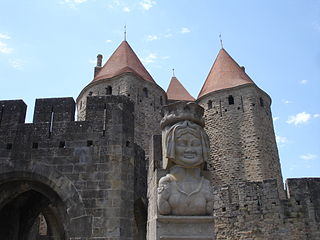
I have a special affection for the ancient walled city of Carcassone in France though I have never been there. There is an apocryphal legend about Lady Carcas (FrenchDame Carcas) and the origin of Carcassonne‘s name. What follows below is borrowed from Wikipedia, complete with a picture of the bust representing the great Dame Carcas herself. After you read her tale, I will tell you how that possibly fictional lady embedded herself in my imagination and my affections. And how she may have possibly saved my life.

The legend

The legend takes place in the 8th century, during the wars between Christians and Muslims in the southwest of Europe. At the time, Carcassonne was under Saracen rule and Charlemagne‘s army was at the gates to reconquer the city for the Franks. A Saracen princess named Carcas ruled the Knights of the City after the death of her husband.

The siege lasted for five years. Early in the sixth year, food and water were running out. Lady Carcas made an inventory of all remaining reserves. The villagers brought her a pig and a sack of wheat. She then had the idea to feed the wheat to the pig and then throw it from the highest tower of the city walls.

Charlemagne lifted the siege, believing that the city had enough food to the point of wasting pigs fed with wheat. The gesture lowered the morale of Charlemagne’s men who were also suffering from the long siege and a shortage of supplies.

Overjoyed by the success of her plan, Lady Carcas decided to sound all the bells in the city. One of Charlemagne’s men then exclaimed: “Carcas sonne!” (which means “Carcas rings”). Hence the name of the city.https://en.wikipedia.org/wiki/Carcassonnehttps://en.wikipedia.org/wiki/Carcassonne

Me and Lady Carcas

I first made the acquaintance of Lady Carcas as a child. She was featured in a volume of the Childcraft books I practically lived in at the time. Her story was colorfully illustrated.

As I recall the story back then, it involved a cow, not a pig. The cow was let out through the gates of the walled city and not thrown from a tower. The waiting hordes were in flagging spirits themselves. The sight of an actual fatted calf (as it were) robbed the marauding hordes of all lust for battle and they disbanded.

Lady Carcas’ story came back to me as a struggling single parent, navigating a difficult divorce. For reasons the book I am writing will detail, I was intractably estranged and at loggerheads with the maternal side of my family. More to the point, my mother.

So as I surfed the tempestuous waves that beset me in the wake of my failed marriage, a career setback, and a teeny, tiny alcohol addiction, I played the Lady Carcas card.

I was hurting badly in the early years of my babies’ lives, emotionally and financially. But I would never let on for a second how badly to my mother or her side of the family. Sadly, this freezeout eventually included my only two siblings who were firmly planted in Mom’s corner. Me and my sisters had been intermittently close off and on growing up. But the connection after my marriage ended became easily strained and tenuous until it finally snapped.

My survival strategy in those lean and tumultuous years was to act as if I was managing all of my injuries and responsibilities without a single care. I worked. I socialized. I moved about in society as if I hadn’t a trouble in the world.

Those whose eyebrows might raise a little whilst reading about the extremity of adopting such defensive tactics within one’s own family were no doubt raised in nice, normal, supportive families. Those who were not – like I was – will recognize and relate to my experience in a heartbeat.

In a mixture of what sounded like utter frustration and despair, my mother once shrieked at me: “You don’t need anyone!” That only proved my ruse was working. If I had continued to display my pain and vulnerability in front of these flying monkeys, they would have torn me into pieces. More than they already had.

I feel a quiet debt of gratitude to Lady Carcas and her tactics of deception for a good cause. I learned much about protecting my heart and soul in the face of hostility from family rivals and about healing. The goal was to survive my family of origin long enough to emerge and stand in my own truth and certainty. It was like holding my breath underwater for a very, very long time.

When I was finally able to consistently take a full breath, then another, and yet another, it prompted me to utter a silent response of gratitude to a young French noblewoman from many centuries ago who may, or may not even, have existed.

I Don’t Wanna

You know the feeling, right? You just want to hide under the covers, call in sick and disappear from society for a while. It’s a pretty normal feeling.

What amazes me is what gets us up and out of bed every day and into the world. Survival is a great motivator, of course. And validation. And money. Essentially keeping yourself and your family alive. Pretty big carrots.

I am having one of those days. I don’t want to write this post in spite of my daily commitment. I sometimes fantasize about what it would mean to disappear altogether. I think that is called death.

At one time, I felt I was so important that I was sure my absence would cause the moon to shift its appointed course. When that didn’t happen, I was frankly gobsmacked. And annoyed by the insult. Stupid god.

It seems we all have a built-in stress thermometer, however well it functions. The shoulders go up. The teeth clench. The heart beats faster. Our breaths are as shallow as fish. (I don’t know that for sure. I just assume fish aren’t particularly deep breathers.) Some people tolerate higher levels of stress than others. I’m not sure it is a good thing but I know my tolerance has always been pretty high.

Today I had cataract surgery on my left eye. My right eye was done last week. I was pretty calm given they were sticking all manner of intrusive instruments into my eye at very close range.

“Look at the light,” I was instructed which seemed to belabor the obvious. With an eye propped open by a plastic expander, and the machine right up against my eyeball, my choices were limited.

The upside of surgery these days is the happy drugs they give you. Talk about disappearing. As a doctor gets up close and personal with the only existing camera you have been issued for this lifetime, it is nice to have soothing drugs to enjoy instead of thinking about the potentially devastating consequences of a slipped scalpel.

So all in all, I was pretty stress-free throughout the procedure. I deployed the arsenal of stress management techniques I’ve learned. Deep breathing. Visualization of a happy place (of anything but what I was going through.) The happy drugs trumped all of those natural techniques to diminish my stress I am ashamed to say. But happily of course.

I have learned how to manage stress pretty well. Just as I’ve learned to manage physical pain. Many women do. Constant prep for the exertions of childbirth I expect.

A recent dentist visit caused his assistant to visually flinch when I refused the anesthetic normally used to numb the jaw. For me, tolerating a second or two of pain from the drill is far better than nursing a sore and numb jaw for several hours afterward. It even hurts where they stuck the needle in once the numbing wears off. Not everyone would agree with my methods, I realize, but it works for me.

I think an exaggerated ability to tolerate pain might be a questionable response to childhood pain. If no one pays attention to your pain and coddles you when you are little, you get good at handling it on your own.

So though I was having an “I don’t wanna” day, I eventually did what I always do. I did it anyway. The emotional discomfort of not meeting my commitments is far more difficult for me to manage than whatever comfort may be derived from sliding under the covers for a few more hours.

To Be List

Today’s prompt from the 30-day blog challenge intrigued me.

“People come to your blog or website to learn from you,” Frank Taub exclaims. “So teach them something! Maybe a step-by-step guide …. ” Right.

That got me thinking.

I write about healing from an abuse-riddled childhood with addicted parents. Essentially I write about how I got from there to here where life is now stable, happy, and largely peaceful. Quite the leap if I do say so myself.

Frank Taub is right. There were steps to get here.

1. Be born.

2. Ensure one (or preferably both) parents are addicted to some kind of substance.

3. Make super sure they both come from dysfunctional childhoods that were riddled with abuse and neglect.

4. Try to be born into a professional, middle-class family where it was very important to keep up appearances.

5. Have the parents make their primary values making money and acquiring prestige.

6. Have the parents believe: “Children essentially raise themselves.” Another handy belief would be: “Children’s characters are formed by the age of seven and cannot change in adulthood.”

7. Make the parents generally oblivious to the pain or damage their addictions are causing.

8. Be sure your parents don’t take your fears and concerns seriously and dismiss you when you raise them.

9. Push a parent to a suicide attempt. (Having both try to off themselves would be excessive.)

10. When their marriage fails after the suicide attempt, either have them abandon the children or inappropriately parentify them. Now the kids are cooking the meals, doing the shopping and keeping the house clean. So Mommy or Daddy can rest.

11. Withdraw all financial support and necessaries of life in their mid-teens so the kids will have to figure out life and how to make money for themselves.

12. Expect those kids to have a mountain of issues in adulthood that are left for them to work through and overcome.

13. When they raise complaints about their childhood with their parents as adults, have the parents demonize them and make sure everyone knows what bitter disappointments they are.

14. Make sure the parents lie, refuse to take responsibility for any of your troubles, and are there for you only if and when you succeed. Do not object to this.

15. Finally, after years of pain and confusion, and destruction in both your personal and professional, walk away. Leave those parents to the beds they have made for themselves. Love them but from a distance. Preferably a great distance.

SUMMARY: Have kids. Settle down. Start writing about your childhood. WARNING: This could well take years. Your parents may actually have to die before you are able to do this. This is not unusual and does not mean you a bad person.

Lighten Your Load

I have found yet another “fellow traveler” whose message I want to share. I backpacked a lot in various places around the world.

What Dennis Welton says could not be more true. We often overpack when we head out on a journey. And our reasons are often fear-based. Fear of want. Fear of cold. Fear of thirst. Or a myriad of other undefined dangers that “may” be out there. I well understand the inclination.

The worst is, I do it in day-to-day life, too. Making sure I have enough was/is a survival strategy. It was a strong trauma response and no longer serves me.

So I am trying to let go. Slow and steady, of course, so as not to retraumatize myself. And just in case I really need those dozen boxes of waterproof matches to build a fire in the middle of the desert … ya just never know.

Dennis Welton

I wrote this in my journal 5 years ago today while hiking across Spain on the old pilgrim trail called the Camino de Santiago. – DW –

Camino Lesson of the Day

The one thing that everyone that hikes the Camino de Santiago does is to start out carrying too much stuff with us in our packs. There is nothing like walking miles and miles with a loaded backpack to help you figure out what is really important enough to carry on your back day after day, mile after mile.

Something I heard along the way has really stuck with me and I was thinking about it today. They say that “We carry our fears in our backpacks”. In other words, if you are afraid that you will run out of food and go hungry then you carry too much food. If you are afraid of freezing then you carry too many clothes. If you fear not being able to find a place to sleep then you load yourself down with a tent and camping equipment. Of course, all this extra stuff is heavy, which makes us tired and sore and often causes injuries. The soreness and pain make us irritable and cranky and often that is what our fellow hikers see. They don’t see the real us! They are seeing the result of the pain caused by carrying our fears and too much junk in our backpacks.

I was thinking today about how a lot of the excess baggage that we carry around with us in life is the result of our fears. Also how all of us have had things that have happened in our past that has impacted us in a negative way. These fears and bad experiences often cause us to behave and react to life and the people in it the way we do.

Just like a backpacker that is carrying stuff that is not needed or serves no real purpose, we keep lugging around things that we should have dumped long ago. The result is that the people in our lives do not get to see the real us. They don’t get the best of us. Many times they are on the receiving end of the pain caused by the useless junk we are carrying around with us. Often, we have been hauling it around for so long that we have started to believe that it is part of who we are.

Maybe it is time to do what all of us backpackers end up doing along the way on a long walk. Unpack our overloaded personal backpacks and what we are carrying around every day with us. Examine each item honestly, determine if we actually need it or not and if it is really serving a purpose. If not then leave it behind and move on.

Turning loose of something is hard, even if it is of no value because we have been carrying it for so long and we have convinced ourselves that we are not whole without it. Once we have the courage to make the decision to dump whatever is hindering us in our life, walk away from it and start moving forward, we end up wondering why we were carrying it to begin with.

Lighten your load, get rid of the fears and useless junk from the past, and let the real you walk free!”

~ Dennis Welton ~

Whither

The Fourth of July. Big day in the United States. Canada’s birthday was on July 1st. Not nearly as much foofaraw. Canadians are self-effacing even around – maybe especially around – tooting our own horn.

Following a recent blog I posted about why I write, the next prompt I received suggested writing about where I am going with this blog. That caused me pause. The short and easy answer is that I have no particular goal for the blog itself. Outside of that, the blog is supposed to be about writing a book.

More and more, writing this blog is about me getting to know me. It is a privilege. Why does that even matter? It matters because I like feeling grounded. In the midst of several crises in my life, the most frightening part was being knocked off my pins. During those periods, my mind often raced with fear and uncertainty about who I was and where I was headed.

The more confident and lucky out there might say finding your way is simple. Set a path when you come of age and follow it. Like a ship or airplane traveling from Point A to Point B. But is anyone’s life really like that? Don’t most people encounter obstacles and upheavals on the way? Do obstacles enhance their commitment to a path or weaken it?

I remember how gung ho I was about my work life until I had a baby. That pivotal event upended my life as I had known it. None of the previous rules or values seemed to apply anymore. My beliefs about my family. My sense of self. My former priorities flew out the window and regrouped with an exclusive focus on this new life.

I am not the only young mother in the world who was completely overwhelmed by the arrival of their infant. A baby’s needs are incessant and unrelenting. Also, they don’t communicate particularly well. Fitfulness or a crying jag would have my mind racing: “Is he hungry? Is he in pain? Is his diaper wet (or soggy … ew)?”

From the day of my son’s arrival on the planet, my life was no longer exclusively mine. I had responsibilities. I can still remember the feeling of heading home from the hospital with my infant son. I couldn’t believe the nice people at the hospital trusted me enough to send him home in my care. Worse, they forgot to include the manual for how to take care of him. Professional negligence on their part, I thought.

But like all of life’s challenges, you either sink or swim. You may not necessarily do well what has to be done, but you do it as well as you are able. I watched in amazement as this little human evolved day by day gathering strength and skills as he grew. Even more amazing is that he made it to adulthood and he is a fine and fully functioning young man… even without a manual.

So minus the drama and life-or-death issues on the line, writing this daily blog is a little akin to birthing and raising a baby. You may have a sense of where it is going but there are lots of surprises along the way. Feelings about an issue arise that are deeper or more complex than you originally believed. Topics you never gave heed to before seem to need a little more investigation.

There was a time when my mind and heart were besieged by troublesome and intrusive thoughts placed there by a series of unfortunate life incidents. They bedevilled me. Most days I felt like I was in a race to either escape or contain those thoughts or prove to myself that they would not define me.

One day they simply went away. Thoughts that were once my constant companions dried up and went away. I can bring those thoughts back now only with effort and intention. They no longer hold sway over my daily life.

So the goal of this blog and the book I want to write is to wring out the lessons I learned from the life I lived. Those lessons I hope will serve as a guide or beacon to some young woman who was in a similar place of despair as I once was and help her see a way through. There were many books that did that for me.

I often observed that books seemed to arrive on booksellers’ shelves just as I was wrestling with the issue the book addressed. It was unfailing guidance from elsewhere that amazes me to this day. I was lucky enough to have been born on the crest of a new era that was beginning to take trauma seriously.

If a book I produce can one day be a rivulet adding to the river of insight and knowledge about life, I will have achieved all I want to achieve. Meanwhile, writing a daily blog allows me to know me better.

I get to reflect on interesting or funny things that have happened in my life or to others. The occasional comments or relatability of certain topics strengthens my sense of connection to others.

In the end, our lives are nothing else if not one long, often unpredictable, fascinating journey. It brings me satisfaction to share a part of mine and what I’ve learned with the world. I read what others write for similar reasons: to learn what others’ journeys have been like and to learn what they feel is worth sharing.

Why I Write

Prompts are used by writers to grease the creative skids when they’re having trouble thinking up what to write about. Frank Taub has restarted the 30-day blog writing challenge for July and starts each day with a new prompt for challenge participants. This is Day 3 of the challenge and here is the prompt Taub proposes: Tell your readers what got you started in your writing niche. 

My niche is personal growth and healing based on my life experiences overcoming an unstable and abuse-riddled childhood. Both of my parents were professionals and substance abusers. Dad drank. Mom preferred pills. As I came to learn later, addicts’ lives are primarily centered around their cravings. Externals like children and careers are often collateral damage.

I cannot pretend that there was a turning point in my path toward writing. It has always been more of a calling than a choice. My relationship with words started early. I loved stories and I was good with words. They were thought-provoking and fun, ideal enticements for a learning junkie like me. They took me away from where I was.

My mother recognized my predilection toward words. Before the addictions had taken her over, she spent time with me to teach me to read when I was about three years old. We would play word games, starting with the “at” family. I would create words with that suffix by following the alphabet.

Bat. Cat. Fat. Gat. Hat. And so on. Then she would move on to the “an” family. Same routine. Ban. Can. Dan. Fan. The words I came up with at the start reflected my limited vocabulary. That vocabulary expanded over time but I never forgot those early lessons.

Words gave my life order. When things were happening around me and to me that were confusing and scary, words and stories were a safe place I could escape to. In my little bedroom, there was a clothes closet with storage space above it. I learned to climb up to that place when I was a toddler. To hide and to read. I took my favorite pinky blanket and found an escape from the often odd behaviors of addicted parents.

It seems I liked climbing generally when I was a child. There is an 8 mm film somewhere that shows me at two years old on top of a double-seated, wooden swing. Even now, I can remember the feeling of freedom and joy I had. What I couldn’t fathom, in retrospect, was how I got up there. 

I do remember it being one of the few times I felt free in my childhood. I lived with the daily uncertainty of addicted parents. Dad might be drunk. Mom was likely high on pills. I will say one thing about having that kind of childhood: it bred independence. Maybe a little too much.

I have come to fully appreciate the human need for stories. I believe they may have saved my life. For as difficult and lonely as times in my childhood were, stories showed me there were other places I could be. I could be someone else, too. In my head at any rate and if only for a few moments at a time.

Storybooks were like rocks in a river or islands in a stream. Safe crossings. Dry ground. Oases. As I grew older, I began to see words used most carelessly and manipulatively. I became skeptical and derisive of words and how they are used.

There is a sentimental side of me that longs for a time when we could all trust that a person’s word was their bond. I love the ideals of honor and honesty but also the greater values of common human decency and mutual trust and respect. Sadly lacking everywhere today and they are values generally treated with scorn and cynicism.

Yet these are the very type of stories I want to write. Imagining a world where people treat each other with kindness and respect. I also understand that is not the way the world is and may even go against human nature. People’s need to survive will always trump civility.

Until and unless we get to a place of greater egalitarianism around the world, the best a writer can hope to reflect is how individuals cope in an unjust world. And that they do so and still hang on to their values and common human decency is the secret human factor.

There is no magic solution for curing life’s evils. But there is much to be learned about the power of individuals to affect change. Stories of triumph in the face of seemingly insurmountable odds inspire and motivate us. It is the belief and examples set that working toward a common goal will incrementally create change for the better. 

Anthropologist Margaret Mead reminded us: “Never doubt that a small group of thoughtful, committed citizens can change the world; indeed, it’s the only thing that ever has.” https://www.azquotes.com/quote/196005?ref=one-person-can-make-a-difference

David and Goliath stories give us hope without which humans would be utterly lost. Thank god there are enough of them to give all of us hope and keep us moving forward.

The Road Less Travelled

Right this minute, there is an eighty-something-year-old couple making love in their shared bed. Or maybe on their kitchen floor. They are both worried about how they are going to get up. But at this very minute, neither one of them cares.

There is an artist out there – maybe many. S/he is looking intently at the canvas in front of him/her deciding which direction to go in next. This shade of blue-green for those trees in the background. Or a shade or two lighter. A cup of coffee s/he made hours ago is sitting on the table in the art studio. Ice cold.

A writer is looking through a thesaurus yet again for the mot juste to capture and describe that scene of agony, bliss, confusion, or wonder. The writer is looking at that blank page in front of him/her straining to put down on paper what their heart sees and most deeply wants to express. It is a marathon, not a sprint.

These are the lucky ones. There are likely countless thousands more just like them and we have and never will have any idea of who they are. Because frankly, they don’t care much about us. Nothing personal, of course, and if we met them in person, they might be lovely, relatable folk. The point is they are so engrossed in their own version of creation that the entreaties of the world don’t much matter to them.

There are literally millions of people out there in the world vying for your attention. Their motives vary. Some are trying to build their empire by luring you into their vision of what is and should be. Some are just trying to make a living. Others are “trying on” a sales job to see if it is what moves them. Some will stay the course. Others will make a switch while they still can. Maybe they are doing what Mom or Dad did. This job – whatever it is – is the only career possibility they ever thought about.

My father was a lawyer. My mother was a journalist and writer. Their jobs defined my life and my career. But my heart was in neither profession. I was drawn to an entirely different kind of career which – in the end – I did not pursue. Something along the lines of international diplomacy. At the point where I needed to make decisions to move forward on that path, I refused the jump.

My parents neither knew nor showed much interest in my career path. My father derided my university pursuits. He told a boyfriend: “What is Margot doing in university? She is only going to get married and have children.” I was on the Dean’s List and pursuing a double honors major at the time.

I now wish, of course, that I had been strong enough to assign my father’s opinion to the dustbin where it belonged. It is only the strong and emotionally secure who can stand up to the dictates of their caregivers. No matter how weak and emotionally insecure those caregivers were.

The consequence of raising strong, independent human beings is that they may begin to defy you and your expectations as their own lives take shape. Not necessarily in a belligerent, oppositional way but in their own way. As it should be.

Change is scary. Abandoning well-worn paths and habits to tread “the road less traveled” isn’t easy and can be fraught with pitfalls. There are pitfalls you may not necessarily be able to see simply because of your unfamiliarity with the newness of the path you are walking.

I think of this when I think of my own journey to address intergenerational trauma. In my parents’ eyes, life was as it was and there was little that could be changed or affected by our own actions. Neither of my parents was raised in a rose garden.

I watched them dutifully do what parents of their age and stage were supposed to do. They both really messed up – both their own lives and that of their children. “Couldn’t be helped.” “That’s life.” “It is what it is.”

So I choose to celebrate and focus on the elderly couple making mad passionate love when everyone thinks they are past it. I celebrate the failed accountant and struggling visual artist whose parents believed there was “no future” in pursuing a creative passion.

Obviously, I am biased in my tendency to celebrate writers. Those who try to plumb the depths of life’s mysteries and humanity and their own role and take on all of it. By so doing, they add to a perpetual and necessary conversation. That writing has been so denigrated and diminished as an art form is a symptom of the world’s current spiritual sickness.

I recommend we hold on to and encourage writers. When and if the actual day of judgment comes, they may be the only ones who can make sense of how and why we got there. For starters, it is unlikely they unquestioningly accept the dire predictions of religious leaders that eternal doom awaits all but good Christians.

Writers may be the only ones who can show humanity a better option and offer a way out of the grim finality for “non-Christian believers” when the rapture occurs.

What writers know is that our lives are built on and built out of stories. Choose or create one that works for you. Be skeptical that others have your best interests at heart when they are trying to change their beliefs into yours. Screw your brains out on the kitchen floor if it brings you joy. At the end, no one else’s opinion matters but yours.